Professional Electric Car Charger: What Sets Professional Grade Apart
The label professional electric car charger gets attached to a lot of hardware, but the word means something specific. It is not about a metal casing or a higher price — it is about whether the unit can earn its keep in a commercial, fleet or public setting where downtime costs money, metering must be accurate, and the network has to be managed remotely. This guide sets out the dividing line between professional-grade equipment and capable consumer devices, so you can judge the "professional" claim on evidence rather than marketing.
Billing-Grade Metering and Revenue Integrity
A consumer charger reports energy for information. A professional one measures it for money. The difference is a calibrated meter that meets revenue-grade accuracy, so an operator can bill drivers, split costs between tenants, or reclaim VAT with confidence. Where charging is a service rather than a perk, this single feature decides whether the installation is lawful to monetise.
The commercial side of this is covered in our public fast-charging solution and the retail destination approach, where accurate metering underpins the business case.
Full OCPP Support, Not a Closed App
Why the Open Protocol Matters
OCPP lets the charger talk to any compliant backend. A professional unit supports the full protocol — not a trimmed version — so the operator is never locked to one software vendor or stranded when that vendor changes pricing.
Gresgying's participation in the open-charging alliance reflects this commitment; details are in our CharIN OCA membership note. The management implications are explored in our charging hub connectivity work, which shows how a backend-agnostic design protects the operator over time.
Dynamic Load Management at Site Scale
One charger can be set by hand. A professional site has dozens, and the building supply is fixed. Dynamic load management shares that capacity in real time, throttling one vehicle to free headroom for another and protecting the main fuse without manual intervention. It is the feature that turns a row of boxes into a coordinated network.
Safety Redundancy and Surge Protection
Professional environments cannot afford a single point of failure. Beyond the standard residual-current and overcurrent protection, professional-grade units add lightning and surge protection, redundant sensing, and self-diagnostic routines that isolate a fault before it spreads. Gresgying's higher-power cabinets are independently certified for exactly this resilience — see the TÜV SÜD certification of the 120–180 kW station and the PTB certification for the 480 kW terminals.
Remote Operations and Lifecycle Support
Manage From Anywhere
Professional units report status, faults and energy use to a dashboard, so a site manager fixes problems before drivers complain — often without a site visit.
Support That Lasts
A stricter warranty, guaranteed spare parts and firmware updates over the product's life separate a professional supplier from one that disappears after the sale.
Our fleet management article shows how remote operations pay off in practice, and the supporting fleet-operations features are detailed in our dedicated guidance for depot operators.
The Prosumer Grey Zone
Not every capable unit is professional, and not every professional unit is overkill. A small workplace with three cars may not need billing-grade metering, yet still benefits from OCPP and load management. The honest question is not "consumer or professional" but "which professional capabilities does this site actually depend on". Answer that, and the right tier becomes clear rather than assumed.
Where Professional Grade Belongs
- Commercial sites: Workplaces and retail parks where charging is offered to staff or customers — see our workplace solution.
- Fleets: Depots running pooled vehicles on tight schedules, covered by our fleet hub approach.
- Public networks: Open stations where uptime and billing accuracy are contractual, described in our public network power guide.
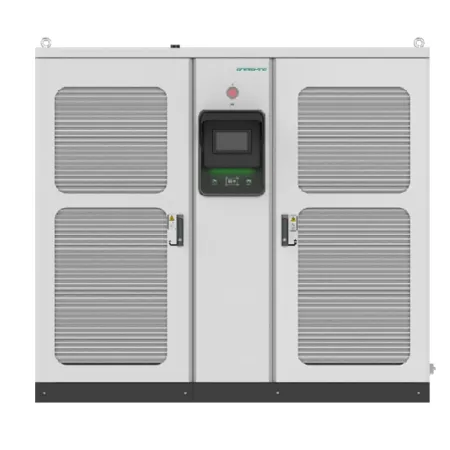
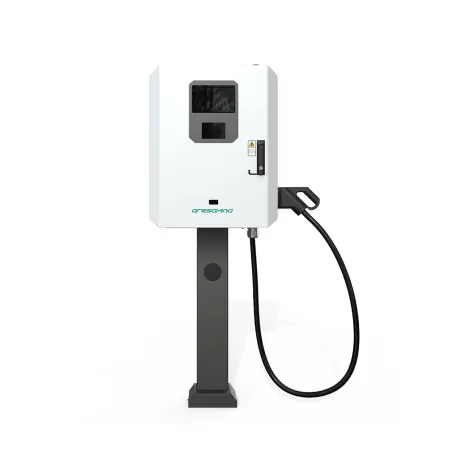
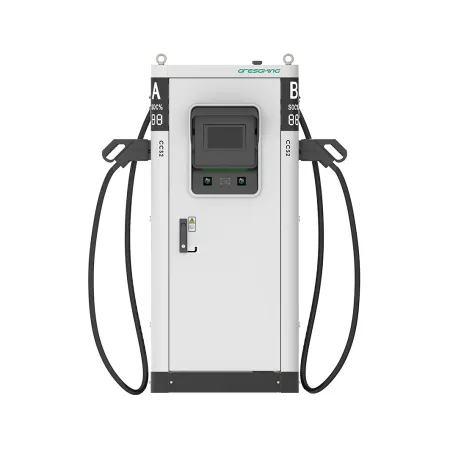
Gresgying's professional DC range — from the 60 kW station to the 480 kW hub host — is built around these requirements rather than added to them afterwards.
Rule of thumb: if the charger has to bill, report, survive unattended and keep running for years, "professional grade" is not a label — it is a checklist of concrete capabilities.
The Total-Cost-of-Ownership Difference
Professional grade usually costs more up front, but the gap narrows over the life of the asset. A consumer box that fails after two years forces a full replacement and a return visit from an electrician; a professional unit with remote diagnostics and a longer warranty is fixed in software or swapped under cover. Accurate metering turns a cost centre into a recoverable expense, and load management defers or removes the need for a costly supply upgrade. Seen across five or ten years and dozens of vehicles, the "expensive" professional charger is frequently the cheaper one.
This lifecycle view is central to any serious deployment. Our DC charger ROI analysis and the charging station planning strategy both treat the charger as a long-term asset rather than a one-off purchase, which is exactly the professional mindset.
Conclusion
A true professional electric car charger earns the title through billing-grade metering, full OCPP, dynamic load management, hardened safety, remote operations and a support commitment measured in years. If your charging is a service, an asset or a fleet dependency, those capabilities are what separate a tool that works from one that scales. Hold any "professional" claim against this list, and the marketing fades to leave the engineering.
Building a Professional Charging Site?
Talk to Gresgying about metering, OCPP, load management and the support your commercial or fleet project needs.
Get Your Free Quote →