
Best Price Wallbox Charger: What the Price Tag Leaves Out
Search for a best price wallbox charger and you will find figures that differ by a factor of three for equipment that looks almost identical on a specification sheet. The gap is rarely random. It reflects different power ratings, different certification positions, different levels of metering and connectivity, and very different assumptions about what the buyer will need later. This guide breaks the price down into its parts, shows which costs sit outside the unit itself, and sets out how to compare offers in a way that makes the cheapest option genuinely the best one.
What "Best Price" Really Means
The lowest purchase price and the best price are not the same thing. A wallbox is a fixed asset that will be in service for eight to twelve years, connected to a supply, relied on daily, and occasionally repaired. The relevant figure is therefore the cost of owning and running it across that life — the unit, the installation, the electrical work, the energy it consumes, and the cost of the failures it does or does not have. A unit that costs 20% less but needs replacing at year five is the more expensive choice.
A useful way to frame it: the purchase price is the smallest of the three numbers that matter. The other two are installation and lifetime running cost. Comparing only the first is how buyers end up paying more overall.
What Drives the Unit Price
Two units can therefore share a power rating and differ substantially in price for reasons that have nothing to do with build quality. Before treating a quote as expensive, establish which of the rows above it actually includes. The full range of AC hardware, including how these choices are made in production, is described in Gresgying's guide to AC chargers.
The Costs That Sit Outside the Unit
Electrical Work and Cable Run
Distance from the distribution board, whether a trench is needed, and whether the board has spare ways often exceed the price of the unit itself. Long runs also require larger cable, which escalates quickly.
Protection and Isolation
RCD or RCBO devices, surge protection and a local isolator are mandatory in most jurisdictions. A unit with integrated DC leakage detection can reduce what must be added externally.
Consents and Commissioning
Listed-building consent, landlord permission, network notification and formal commissioning all carry administrative cost. These are predictable, so they belong in the budget from the start.
Back-Office and Access Control
Where sessions must be billed or restricted, the platform subscription, RFID cards and configuration time are ongoing costs rather than one-off purchases.
On many single-point installations these outside costs total more than the hardware. The practical sequence for getting them right is set out in Gresgying's installation guide.
Comparing Quotes on Equal Terms
Most wallbox quotations are not directly comparable because they scope different things. Two suppliers can quote the same hardware and end up 40% apart simply because one includes the cable, the protection device and commissioning while the other lists only the unit.
- Scope of supply Is the cable, holster, protection device and isolator included, or listed separately?
- Installation basis Fixed price, per-metre cable rate, or an estimate that will be revised on site?
- Warranty terms Years covered, what is excluded, and who pays labour on a claim?
- Spares and support Availability of cables and connectors locally, and the stated response time.
- Certification evidence Can the approval documents be produced on request, not just referenced?
Rewrite every quote into that structure before comparing numbers. The exercise usually reorders the list. Further guidance on matching equipment to the application is available in this article on selecting chargers for commercial applications.
How Volume Changes the Price
Almost every manufacturer prices on a tiered basis, and the curves are steeper than most buyers expect. A single unit carries the full cost of packaging, documentation and handling; a pallet or container load spreads those costs and lets production be scheduled in runs rather than as one-offs.
Manufacturing scale is what makes those tiers possible, and it is worth understanding how a supplier's production capacity affects lead time and consistency as well as price. Gresgying, for example, has been expanding its research and manufacturing base — see the announcement on the new facility for how capacity is being scaled.
Worth Knowing: If a site will eventually need twenty points, buying twenty at once is usually cheaper per unit than buying four at a time — but only if the units you cannot yet install will not be obsolete by the time you do. Staged purchasing trades a higher unit price for lower technology risk.
When a Lower Price Costs More
- Missing certification: An uncertified unit may be refused by an installer or an inspector, leaving hardware you cannot legally energise. The purchase price is then a total loss.
- No local spares: A failed connector or cable on an unbranded unit can take weeks to source. Every week of downtime has a cost, and for shared or revenue-earning points it is measurable. The certification position is set out in this guide to wallbox safety standards.
- Closed firmware: Without OCPP compliance the unit cannot be migrated to another management platform. Replacing working hardware purely because the software stack is locked is an avoidable expense.
- Weak enclosure and cable: The most frequent failure point on any wallbox is the cable and connector. An underspecified assembly turns a one-off saving into a recurring repair line.
- No load management: A cheap unit that cannot be throttled may force a supply upgrade the site did not budget for — often a larger sum than the difference between the two products.
The counterexample is equally real: paying for billing-grade metering, 22kW output or a large display on a private driveway used by one vehicle delivers no benefit at all. Value depends entirely on the site. Features that pay back are covered in this overview of essential AC charger features.
Running Cost: The Number Buyers Forget
Over a decade of daily use, electricity dwarfs the purchase price. Choosing when energy is drawn is therefore the single largest lever on total cost, and it depends on whether the unit can be scheduled and throttled. A wallbox that supports off-peak timing and load management can shift most consumption into cheaper hours without any intervention from the driver.
Sites with more than a couple of points should also consider how energy is distributed between them; unmanaged simultaneous charging is what triggers peak demand charges and, in the worst case, a main fuse trip. The mechanics are covered in this article on optimising energy distribution across multiple units, and in more depth on AC charging energy efficiency.
Rule of thumb: a wallbox that costs slightly more but can be scheduled, throttled and repaired locally usually pays back the difference within the first two years of operation.
How to Get the Best Price Without Cutting Corners
- Specify before you ask: State power rating, supply type, metering, connectivity and enclosure rating in the enquiry. Vague briefs invite quotes that cannot be compared.
- Buy to the site, not to the catalogue: Matching the power level to actual dwell time avoids paying for capacity nothing can use. The charger selection guide works through the decisions in order.
- Consolidate the order: Combining a site's requirements into one purchase reaches a better price tier and cuts freight per unit.
- Ask for the certification documents: Requesting approvals up front filters out suppliers quickly and costs nothing if the answer is ready.
- Check spares before you buy: Confirm that cables, connectors and controllers will still be available in five years, and ask how quickly.
- Keep the technical file: Datasheets, declarations of conformity and manuals should be filed with the asset. The relevant documents are collected in Gresgying's download centre.
Conclusion
The best price wallbox charger is the one with the lowest total cost over its working life, not the lowest figure on a quotation. That means buying the right power level for the site, ensuring the certification and documentation are genuine, confirming that spares and support exist locally, and choosing a unit that can be scheduled and throttled so energy is drawn when it is cheapest.
Get those four things right and the price difference between a good wallbox and a cheap one becomes almost irrelevant. Get them wrong and the saving disappears the first time the unit fails or the cable needs replacing. When you are ready to compare options on that basis, Gresgying's product range covers single-phase and three-phase wallboxes for home, workplace and fleet sites.
Want a Quote You Can Actually Compare?
Tell Gresgying your power rating, supply type and site count — we will come back with a full specification, certification documents and landed pricing.
Request Your Price →Related Products
More items about wallbox charger


We Have The Best Solutions for Your Business
User Reviews
What users say about Us
Frequently Asked Question
Do you have any question?
Our Wallbox Chargers have a power output range from 3.7 kW to 22 kW.
Yes, our Wallbox Chargers are designed to be compatible with all types of EVs.
Yes, we provide a 2-year warranty on all our Wallbox Chargers.
The charging time depends on the EV's battery capacity and the charger's power output. On average, it takes about 4-6 hours.
Yes, our Wallbox Chargers are designed for both indoor and outdoor installations.
Yes, our Wallbox Chargers are certified by TÜV, CE, and other relevant safety standards.
Yes, our Wallbox Chargers can be integrated with most smart home systems.
Yes, our Wallbox Chargers are designed to handle voltage fluctuations.
Our updates and blog posts

Gresgying AC Charger: Powering Your Devices Efficiently
Gresgying AC Charger is an efficient, safe and portable charger that provides fast and safe charging for a variety of devices, making it your ideal charging solution.

Gresgying Charging Center: Revolutionizing the way we power our devices
Gresgying Charging Hub is a powerful and portable charging station that can provide fast and safe charging for multiple devices at the same time, making it an ideal choice for technology enthusiasts.
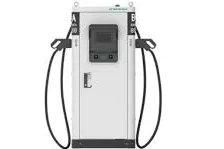
Gresgying charging stations: the rules of the road for device charging
Gresgying Charging Station is a powerful and portable charging station that can provide fast and safe charging for multiple devices at the same time, making it an ideal choice for technology enthusiasts.