720kW Electric Car Charger: Megawatt Charging for Heavy Transport
When charging moves beyond passenger cars and into trucks, buses and industrial equipment, the numbers change by an order of magnitude. The 720kw electric car charger — and the megawatt-class systems it represents — is not built for a quick coffee-stop top-up. It is built to move enormous amounts of energy into heavy vehicles on tight logistics schedules. This guide explains the Megawatt Charging System (MCS) standard, why heavy transport needs it, and what it takes to plan infrastructure at this scale.
What Megawatt Charging Actually Means
Megawatt charging refers to systems delivering power in the hundreds of kilowatts to over a megawatt, far beyond the 50–350kW range typical of passenger-car DC. At this scale, a heavy truck with a large battery can recover a usable range in the time it once took to refuel, rather than the hours an AC or low-DC connection would require. The defining technology here is the MCS connector and protocol, designed specifically for the high current and cooling demands of commercial vehicles.
Gresgying's own move into this class is documented in our announcement about launching a megawatt charging unit for the high-power e-mobility market, an early signal of where heavy transport charging is heading.
The MCS standard is deliberately distinct from the CCS connectors used by passenger cars. It is engineered for currents far beyond what a car could safely draw, with heavier contacts, enhanced cooling and communication that supports fleet-scale billing and scheduling. That separation matters: it lets heavy-vehicle charging be specified, installed and operated as its own discipline rather than as an awkward extension of car infrastructure, which keeps both safety margins and operational clarity high.
Beyond Cars: A 720kW stall is sized for trucks, coaches and depot equipment, not a family EV. Connecting a passenger car to this much available power simply means the car draws what it can — the infrastructure is built for vehicles that can actually use it.
Where 720kW and MCS Belong
Logistics and Freight Hubs
Distribution centres where trucks turn around on tight clocks need energy delivered fast. Our fleet hub charging thinking scales up to this duty cycle.
Public High-Power Corridors
As electric coaches and heavy EVs travel longer routes, corridor sites must offer megawatt-class stops. Our public fast charging solutions already span the lower tiers of this spectrum.
Depots and Ports
Where many heavy vehicles charge overnight or between shifts, shared high-power architecture keeps the site compact and efficient — see our charging hub overview.
Power Sharing and Liquid Cooling at Scale
A 720kW system is rarely a single isolated stall. It is usually a shared power pool feeding several terminals, with intelligent controllers allocating energy to whichever vehicle can accept it. This is where liquid cooling becomes essential: at these currents, air-cooled cabling would be unsafe and unwieldy. The same principles that govern smaller hubs apply, only amplified — which is why modular architecture matters so much.
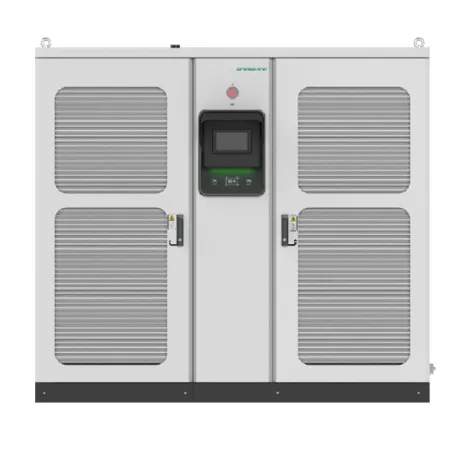
Gresgying's existing high-power building blocks — the 480kW charging hub host, the booster terminal and the high-power terminal — show how modular power pools are assembled today, a foundation that the megawatt class builds upon. Our report from the Shenzhen CPSE exhibition illustrates these systems in action.
Grid and Site Demands
A site capable of 720kW draws a very large current, and that has consequences well beyond the charger itself. Operators must plan for a high-capacity grid connection, often a dedicated transformer, on-site energy storage to shave peaks, and careful thermal and safety design. These are not afterthoughts; they are the core of the project. Our articles on high-throughput power management and urban network design cover the planning discipline this scale demands.
- Grid connection: Expect a dedicated supply and transformer; this is the dominant cost and lead-time item.
- Storage and buffering: On-site batteries smooth demand and reduce connection fees.
- Future-proofing: Choose modular architecture so capacity can grow without rip-and-replace.
Planning Infrastructure for the Future
Megawatt charging is as much an infrastructure bet as a hardware purchase. The right time to plan for it is before heavy vehicles arrive in volume, because grid connections and civil works take far longer to deliver than the chargers themselves. Our thinking on scalable charging infrastructure and modular hub scalability applies directly here. And the underlying DC physics are explained in our guide to DC charger power output.
Conclusion
The 720kw electric car charger represents the megawatt frontier — the domain of trucks, coaches and heavy equipment rather than passenger cars. It is defined by the MCS standard, by liquid-cooled cabling, by shared modular power, and by grid and site requirements an order of magnitude above everyday DC. For logistics hubs, freight corridors and depot operators planning a decade ahead, it is the infrastructure logic that makes electric heavy transport viable. Build the grid and the modular foundation early, and the chargers themselves become the easy part.
If you are scoping high-power or megawatt-class infrastructure, our team can help map grid capacity, modular architecture and the right terminal mix to your operation.
Planning Megawatt-Class Charging?
Talk to Gresgying about MCS infrastructure, modular power pools and grid strategy for your freight, fleet or corridor site.
Get Your Free Quote →