DC Electric Car Charger: Direct Current Fast Charging Explained
When a driver pulls up to a motorway stop and adds 200 kilometres of range in twenty minutes, the technology behind that experience is a dc electric car charger. Unlike its AC cousin, a DC charger does the heavy electrical work itself, bypassing the car's onboard converter entirely. This article explains how DC fast charging works, what power levels exist, how the charge curve behaves, why cooling matters, which connector standards you will meet, and where DC deployment makes commercial sense.
How DC Charging Bypasses the Onboard Charger
The defining feature of a dc electric car charger is that it contains its own power electronics. It draws AC from the grid, rectifies it to high-voltage DC inside the cabinet, and delivers that DC straight to the vehicle's battery through a dedicated DC connector. The car's onboard charger is switched out of the circuit entirely.
This is why DC units are physically large and expensive. All the conversion hardware that would normally sit inside the vehicle is instead packed into a roadside cabinet, cooled, metered and controlled. The payoff is speed: with no onboard-charger bottleneck, a DC charger can push tens or hundreds of kilowatts into the pack. Our deep dive on DC charging explains the benefits from the driver's perspective.
DC Power Levels: 30 to 480kW and Beyond
DC charging spans a wide range, from compact 30kW units suited to light commercial sites up to megawatt-class systems for heavy transport. The common tiers:
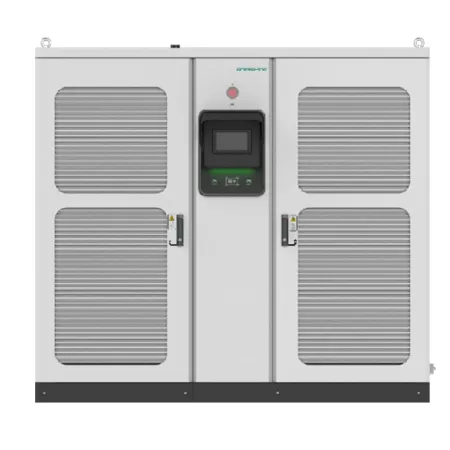
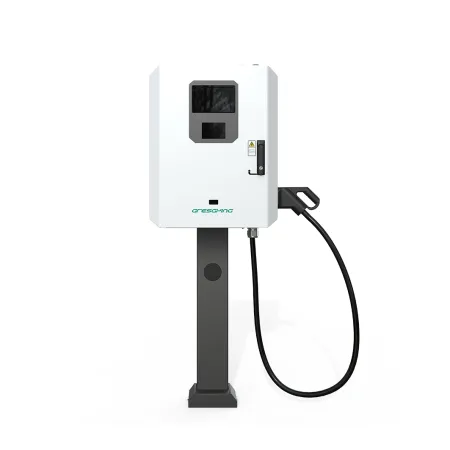
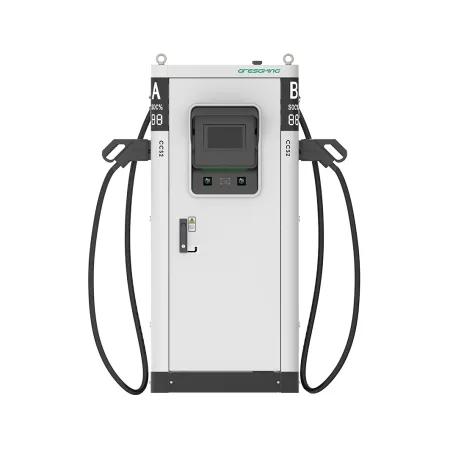
Gresgying builds across this whole range, from the 30kW DC charger and 60kW station through the 120–180kW station to the 480kW hub host and HPC terminal. Our power-output guide connects these numbers to real infrastructure planning.
The Charge Curve and the SOC Window
A DC session is not linear. Batteries accept the most power when low and progressively throttle the current as they fill. The fastest portion is typically from roughly 10% to 50% state of charge, with the rate falling sharply above 80%. This is why the industry quotes the 10–80% window rather than a full charge: the final 20% can take as long as the first 60%.
Understanding this curve matters for siting. A public fast-charging solution should plan bays around the 10–80% dwell time, not the theoretical maximum, so that throughput stays high. The engineering details are set out in our high-performance DC spec guide.
Cooling, Heat and Liquid Cooling
Pushing hundreds of kilowatts generates serious heat, in both the cabinet and the cable. At lower tiers, forced-air cooling is enough. At 180kW and above, liquid cooling of the power modules and sometimes the cable itself becomes necessary to keep components within safe limits and to let the connector carry the current without overheating.
Air-Cooled Up to ~120kW
Most 30–120kW units manage heat with fans and heatsinks. They are simpler, lighter and cheaper to service, which suits urban and fleet sites with moderate duty cycles.
Liquid-Cooled for 180kW+
Ultra-fast terminals circulate coolant through modules and cables. This enables sustained high power and thinner, lighter cables, and the ultra-fast station range is where this hardware shows its full benefit.
Connector Standards: CCS, CHAdeMO, NACS and GB/T
A dc electric car charger must speak the right physical and communication language for the vehicles it serves. The main standards are CCS (Combined Charging System, dominant in Europe and North America), CHAdeMO (still found on older Asian and fleet vehicles), NACS (growing rapidly in North America), and GB/T (common in China). Gresgying's DC products support multiple protocols; our CHAdeMO certification is one example of how multi-standard compatibility is validated.
Deployment Thresholds and Where DC Pays Off
DC is not a drop-in upgrade. It demands a large grid connection, often a transformer, civil works, and a revenue or payment system. That is why it belongs where throughput and speed create value: highway corridors, taxi and ride-hail depots, logistics fleets, and retail or destination sites that monetise the dwell time. A 180kW unit in service is described in our Iceland installation story, and the 120–180kW range's TÜV certification is covered here.
- Grid capacity: Confirm the available supply and whether a new transformer or connection upgrade is needed before committing to a site.
- Business model: DC only pays back where vehicles arrive needing speed; pair it with our DC ROI analysis to model the case.
- Load management: High-throughput sites need power-management strategies so multiple units share the connection without tripping it.
For the complete picture of DC products and deployment, start with our DC charger solutions overview and the everything-you-need-to-know guide. The rapid charger page rounds out the lower end of the DC range, while the high-power tiers above suit sites where throughput is the core business metric.
Rule of thumb: DC earns its keep only where time is the product. If drivers are parked for hours anyway, AC is cheaper and kinder to the battery.
Conclusion
A dc electric car charger is a self-contained power plant on the roadside. By moving the conversion out of the car, it delivers the speed that long-distance and high-turnover scenarios demand — at the cost of greater complexity, cooling, grid requirements and capital outlay. Choose it where the 10–80% window and vehicle throughput justify the investment, and lean on AC everywhere else. Planning the site properly, from the grid connection to the payment backend, is what separates a profitable DC location from an expensive one, so bring those questions to the table early.
Planning a DC Charging Site?
Talk to Gresgying about power levels, cooling, connector standards and grid connection for your fast-charging project.
Get Your Free Quote →