
E Charger Wallbox: Clearing Up the Terminology
The phrase "e charger wallbox" is a piece of shorthand that appears in search boxes and casual conversation more often than in product catalogues. It is not a separate class of equipment — it is a relaxed way of saying an electric-vehicle wallbox charger. This guide explains what the term maps to, why the naming drifts between regions, and what the actual product delivers once you look past the words.
What "E Charger Wallbox" Actually Refers To
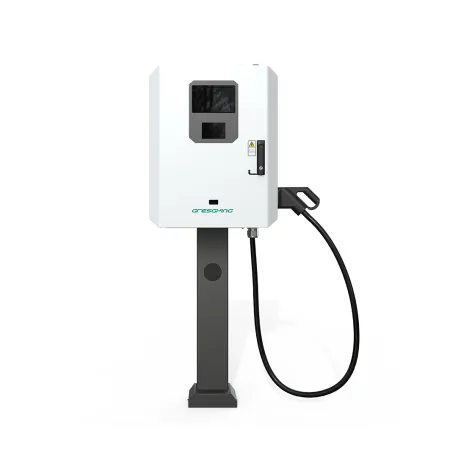
"E" here is simply the abbreviation for electric, and the unit in question is the same AC wallbox discussed across the rest of this series. There is no special "e charger" standard; the term collapses "electric car charger" and "wallbox" into one informal label. Knowing that saves confusion, because the specifications that matter — power rating, phase, connector and enclosure — are identical whether the box is called an e charger wallbox or an EV wallbox charger. Gresgying's own product page for the Turbo Wallbox shows the real hardware behind the shorthand.
Why Naming Varies Across Markets
Different regions lean on different words for the same device. North American listings often say "EVSE" or "charging station", continental Europe says "wallbox", and informal English mixes "e charger", "EV charger" and "electric car charger" almost freely. The variation is linguistic, not technical. What stays constant is the function: a fixed AC unit that delivers current to the vehicle's onboard charger through a Type 2 or similar connector. The broader AC product context is covered in Gresgying's guide to AC chargers.
The Product Behind the Name
Strip away the labels and you have a compact enclosure with a control board, a contactor, metering, and a connector or socket. The wallbox passes protected grid AC to the vehicle, which does the actual conversion to DC inside its onboard charger. That is why every wallbox in this family is an AC device regardless of what prefix someone puts in front of "charger". The Turbo Wallbox write-up explains how the same platform scales from a basic home point to a connected commercial unit.
Power Ratings from 3.7 kW to 22 kW
The honest range for an AC wallbox spans 3.7 kW at the low end — a slow overnight top-up on a limited supply — up to 22 kW on three-phase power. Most homes land at 7 kW, which refills a typical battery overnight, while workplaces and destinations often choose 11 kW or 22 kW where three-phase supply exists. Gresgying's 11 kW smart wallbox, introduced in a market where three-phase is standard, is a good example of the mid-range step. A 22 kW AC unit was also shown alongside DC products at the London EV Show, illustrating where AC stops and DC begins.
What Decides Single-Phase or Three-Phase
The phase count is set by the building's supply, not by the vehicle. A single-phase wallbox uses one live conductor and tops out around 7.4 kW; three-phase uses all three and reaches 22 kW. If your site only has single-phase service, a 22 kW box will simply deliver 7 kW to it — you cannot create phases that are not there. This is why the first question on any specification is always "what does the supply look like?", a point Gresgying's AC charger guide returns to repeatedly.
How It Differs from a DC Fast Charger
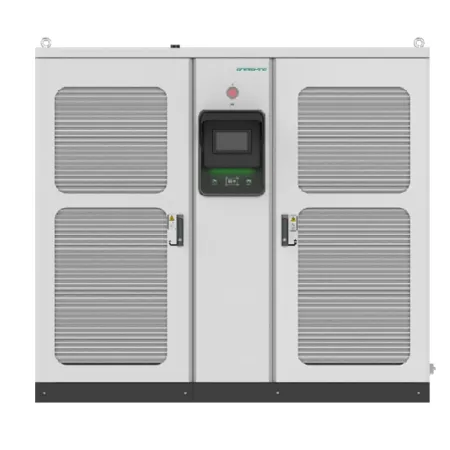
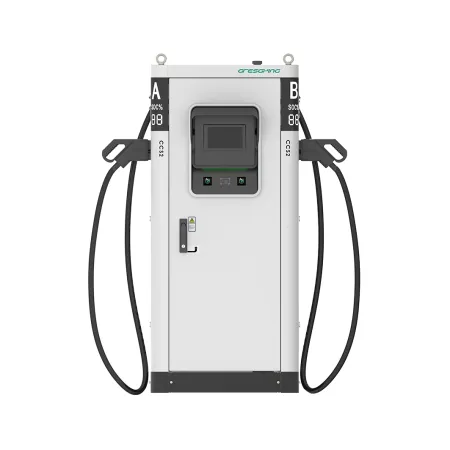
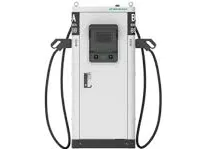
An AC wallbox relies on the car's onboard charger to convert current; a DC fast charger carries the heavy conversion electronics inside the cabinet and feeds DC straight to the battery, which is why it can deliver 30 kW, 120 kW or far more. The difference is not speed alone but where the power electronics sit. A 30 kW DC unit from Gresgying shows the contrast in hardware scale, and the guide to DC power output explains the infrastructure each approach demands. For everyday parking, AC is the lighter, cheaper, longer-lived layer.
A Short Glossary of Specification Terms
A few terms recur on every datasheet: "onboard charger" (the car's converter, which caps AC speed), "OCPP" (the open management protocol), "Type 2" (the IEC 62196 connector common in Europe and Asia), "IP rating" (ingress protection for outdoor use), and "load management" (sharing a limited supply across points). Knowing these lets you read any listing — whether it says e charger wallbox, EV charger or electric car charger — and compare like for like. Gresgying's AC product line is a useful reference for seeing them in context.
Choosing the Right Rating for Your Site
Pick the rating from the supply and the dwell time, not from the headline number. Long parked stays (home, workplace, fleet depot) are served perfectly by 7 kW; shorter destination stops where three-phase is present can justify 11 kW or 22 kW. The EV charger selection guide walks through the full decision, and the workplace solution page shows how ratings are deployed across a staff car park.
Conclusion
An "e charger wallbox" is ordinary language for an ordinary AC wallbox, and the buying decisions are the same ones applied to any unit in this family. Match the rating to your supply and your parking time, confirm the connector and enclosure, and the shorthand stops mattering. For a closer look at the hardware, Gresgying's wallbox overview covers the full range.
Need Help Specifying the Right Wallbox?
Talk to Gresgying about supply assessment, phase count and the correct AC rating for your home, workplace or destination site.
Get Your Free Quote →Related Products
More items about wallbox charger


We Have The Best Solutions for Your Business
User Reviews
What users say about Us
Frequently Asked Question
Do you have any question?
Our Wallbox Chargers have a power output range from 3.7 kW to 22 kW.
Yes, our Wallbox Chargers are designed to be compatible with all types of EVs.
Yes, we provide a 2-year warranty on all our Wallbox Chargers.
The charging time depends on the EV's battery capacity and the charger's power output. On average, it takes about 4-6 hours.
Yes, our Wallbox Chargers are designed for both indoor and outdoor installations.
Yes, our Wallbox Chargers are certified by TÜV, CE, and other relevant safety standards.
Yes, our Wallbox Chargers can be integrated with most smart home systems.
Yes, our Wallbox Chargers are designed to handle voltage fluctuations.
Our updates and blog posts

Gresgying AC Charger: Powering Your Devices Efficiently
Gresgying AC Charger is an efficient, safe and portable charger that provides fast and safe charging for a variety of devices, making it your ideal charging solution.

Gresgying Charging Center: Revolutionizing the way we power our devices
Gresgying Charging Hub is a powerful and portable charging station that can provide fast and safe charging for multiple devices at the same time, making it an ideal choice for technology enthusiasts.
Gresgying charging stations: the rules of the road for device charging
Gresgying Charging Station is a powerful and portable charging station that can provide fast and safe charging for multiple devices at the same time, making it an ideal choice for technology enthusiasts.