Electric Car Charger Production: Quality Control at Every Stage
A charger's reliability is decided long before it is installed — on the production floor. How a unit is built and tested determines whether it runs for a decade or fails in its first winter. This article walks through the quality chain of electric car charger production, from incoming parts to the final power-on, and explains why each gate protects the equipment you deploy.
IQC — Incoming Quality Control
Quality starts at the dock. Incoming Quality Control checks every batch of components — power semiconductors, connectors, enclosures, cables — against specification before anything reaches the line. Critical parts are sampled and sometimes fully inspected; a single wrong-grade capacitor can undermine an whole batch. Gresgying's disciplined incoming checks support the material compliance proven through RoHS and REACH certification.
IPQC — In-Process Control on the Line
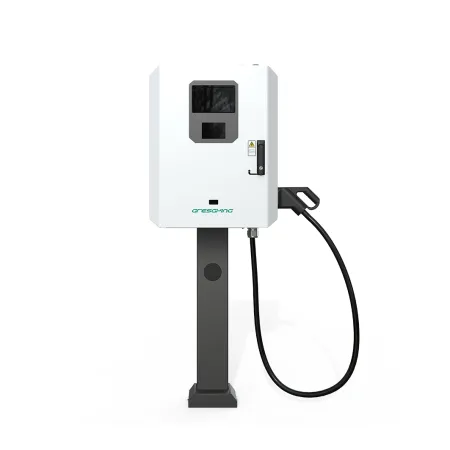
As the unit is built, In-Process Quality Control watches the workstations. Torque on high-current terminals is logged, solder joints are inspected, and harness routing is verified against the standard. Catching a defect here costs almost nothing; catching it after shipment can mean a recall. The line discipline behind our AC units such as the Turbo Wallbox is maintained by IPQC at every station.
Why the Three Gates Matter
IQC stops bad parts entering, IPQC stops bad builds leaving the bench, and OQC confirms the finished unit. Skip any one and defects flow straight to your customer.
Ageing (Burn-In) Under Load
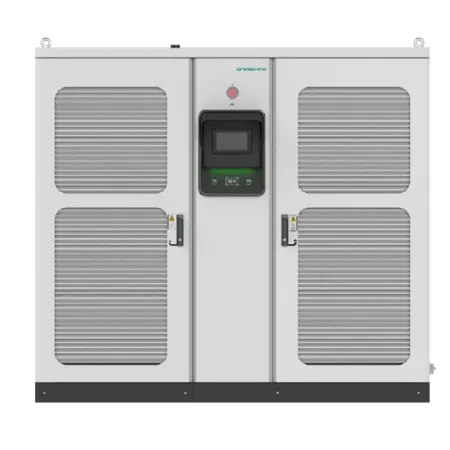
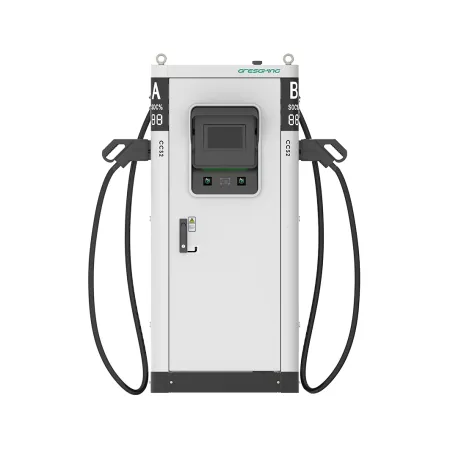
Before a charger is cleared, it should run at rated power for a defined period in a temperature-controlled bay. Ageing forces out infant-mortality components — weak fans, marginal capacitors, poor solder — that would otherwise fail in the field within weeks. For high-power equipment such as the 120–180kW station and the 480kW hub host, burn-in is where expensive early returns are prevented.
Withstand-Voltage and Safety Test
Every finished unit must pass dielectric withstand (hi-pot) and ground-bond testing to prove its insulation holds under fault conditions. This is the user-safety gate, and it should be applied per unit, not per batch. The standards behind this are detailed in our article on commercial wallbox safety standards, and our CE certification reflects the same discipline.
Ingress-Protection Verification
Outdoor chargers live in rain, dust and heat, so the enclosure's IP rating must be real, not claimed. Production verification includes gasket inspection, gland fit and, on sampled units, spray or dust testing. A loose gasket is invisible at a glance yet guarantees corrosion over a couple of seasons. Workplace deployments described in our workplace charging solution depend on this holding up.
OQC and Pre-Shipment Power-On
Outgoing Quality Control is the last gate. A finished charger is powered on, communicates with the management system, and runs a controlled charge session to confirm end-to-end function. Only then is it labelled, serialised and packed. The whole chain is enabled by the controlled environment of our Shaanxi manufacturing base, and our high-power terminals carry PTB certification as further proof of tested accuracy.
Rule of thumb: a charger that passes all six gates costs a little more to make and far less to own. The quality chain is what turns a box of electronics into a decade of reliable charging.
Conclusion
Reliable electric car charger production is a chain of gates, not a single inspection. IQC, IPQC, ageing, safety testing, IP verification and a final power-on each remove a class of failure before it reaches your site. When you evaluate a supplier, ask to see the records at every stage — the discipline behind them is the real product warranty. Browse the product collection or visit the download centre for test documentation.
Want Proof of Our Quality Chain?
Gresgying shares IQC, IPQC and OQC records with commercial buyers evaluating a long-term supply partnership.
Request the Records →