120kW Electric Car Charger: The DC Fast Charging Sweet Spot
If you look at the chargers actually being installed along motorways, in retail car parks and at fleet depots, one power rating appears far more often than any other. The 120kW electric car charger has become the default choice for commercial DC fast charging because it delivers genuinely useful speed without demanding the electrical infrastructure of a 350kW or 480kW installation. This guide explains what that power level means in practice, which sites benefit most, and how to specify a unit that will still be earning its keep a decade from now.
What 120kW Means in Real Charging Time
A 120kW DC charger delivers direct current straight to the battery, bypassing the vehicle's onboard charger entirely. For a modern passenger EV consuming around 17 kWh per 100 kilometres, that translates to roughly 600 to 700 kilometres of range per hour of charging at peak output — or, more usefully for drivers, a 20% to 80% top-up in about 18 to 25 minutes.
Most drivers never see the full 120kW for the entire session. Charging follows a curve: output climbs as the battery warms, holds near peak through the middle of the state-of-charge window, then tapers above roughly 80% to protect the cells. The practical measure of a good unit is how long it sustains that middle plateau rather than the headline number on the label, which is why cooling design and control logic matter so much. The engineering behind this is covered in our guide to high-performance DC charger specifications.
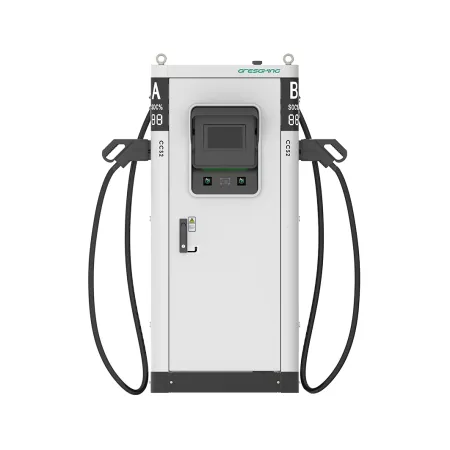
Dual-Gun Reality: A 120kW unit with two connectors usually shares that output between them. One car charging alone gets close to the full rate; two cars charging together each receive roughly half. This is intentional and is why shared-power units serve more vehicles per bay at busy sites.
Why 120kW Became the Most Deployed DC Tier
The popularity of this power class comes down to three-way balance: it is fast enough to satisfy drivers, affordable enough to deploy in volume, and modest enough in electrical demand to be feasible at sites that already have a reasonable supply.
- Driver acceptance: A 20-minute session is close to the tolerance limit for a coffee stop. Pushing beyond 150kW shortens the stop only marginally for most current vehicles.
- Capital efficiency: Cost per kilowatt rises steeply above this tier, while the incremental revenue from faster sessions rarely justifies the premium at typical utilisation levels.
- Grid feasibility: Sites that cannot justify a dedicated high-capacity transformer can still host this tier, especially when power sharing or on-site storage is used.
- Fleet compatibility: Vans, light trucks and mixed passenger fleets all charge comfortably at this rate, so one hardware standard covers several vehicle classes.
Specifications That Actually Matter
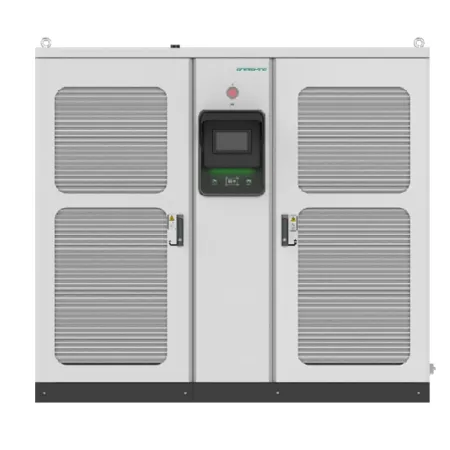
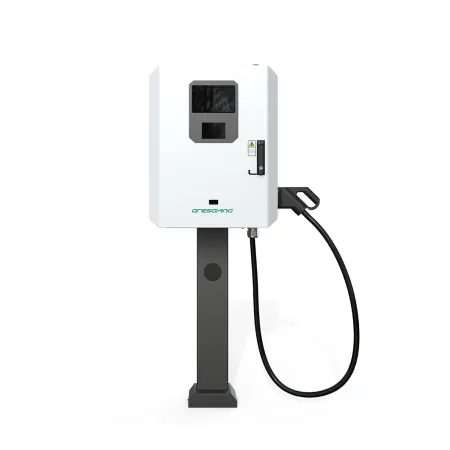
Gresgying's 120–180kW DC charging station platform is built around a shared architecture, giving operators a choice of output level while keeping spare parts, firmware and service procedures identical across the fleet.
Where 120kW Chargers Fit Best
Public Fast-Charging Corridors
Motorway service areas and transport nodes where drivers expect a short, predictable stop. A bank of shared-power units handles traffic peaks better than a single oversized stall; see our public fast charging solutions.
Retail and Destination Sites
A 20-minute top-up aligns neatly with a shopping visit, turning parking into a revenue stream and a reason to choose one location over another. Our retail destination charging approach covers the commercial model.
Fleet Yards With Mixed Duty Cycles
Where some vehicles return mid-shift and need a rapid turnaround, DC units complement the slower overnight AC bays rather than replacing them.
Urban and Business Districts
Sites without space for dozens of AC bays can serve more drivers from fewer DC stalls. Site layout principles are set out in our guide to urban charging network design.
120kW vs 60kW vs 180kW: Choosing the Right Tier
- 60 kW Roughly 40–45 minutes for a 20–80% top-up. Lowest infrastructure demand. Well suited to workplace, depot and destination sites where dwell time is naturally long — see the 60kW DC charging station.
- 120 kW — the balance point Roughly 18–25 minutes for the same top-up. Broad vehicle compatibility, manageable grid demand, strong revenue per bay at moderate utilisation.
- 180 kW and above Saves only a few minutes for most cars today, but makes sense on high-traffic corridors and for next-generation 800V platforms. Where demand is very high, modular hub architecture takes over — see the 480kW charging hub host.
A useful rule for capacity planning: estimate the number of sessions per day you expect, multiply by the average energy delivered, and compare that against the capital and connection cost of each tier. Our article on DC charger power output for public networks works through the trade-offs in more detail.
Grid, Power and Site Considerations
- Available capacity: Confirm the spare capacity of your existing supply before ordering. Upgrading a transformer is often the largest single line in the budget.
- Power sharing: Letting units negotiate a shared ceiling avoids a costly supply upgrade and keeps demand charges under control.
- On-site generation and storage: Pairing DC charging with solar and batteries can shave peak demand — the architecture is described in our PV and energy storage charging system overview.
- Cabling and layout: Cable lengths and bay geometry determine how comfortably vehicles can reach a stall when the site is busy.
Certification, Uptime and Return on Investment
Public-facing equipment needs independent validation. The Gresgying 120–180kW platform holds TÜV SÜD certification, which matters both for procurement approval and for insurance. Units deployed in demanding northern European conditions are documented in our case study from Iceland.
Reliability is what converts specifications into returns. A charger that is offline 10% of the time loses 10% of its revenue while still costing full depreciation and rent. Remote diagnostics, modular power stacks that can be swapped in the field, and a defined preventive maintenance schedule all shorten downtime. The financial model is explored in our DC charger ROI analysis.
Conclusion
The 120kW electric car charger occupies the most defensible position in the DC market. It charges quickly enough that drivers treat it as a genuine fast stop, yet it avoids the connection costs and capital intensity that come with ultra-high-power equipment. For motorway services, retail destinations, fleet yards and dense urban sites, it is usually the tier that produces the best return per bay.
Specify carefully: wide voltage range for 400V and 800V vehicles, efficiency above 95%, genuine power sharing, OCPP compliance and certified metering. Get those right and the installation should keep earning long after the vehicles on the road have changed generation.
Planning a 120kW Fast Charging Site?
Talk to Gresgying about power tiers, grid capacity and the right charger mix for your corridor, retail or fleet location.
Get Your Free Quote →