11kW Electric Car Charger: The Three-Phase Buying Guide
Among the many power ratings on the market, the 11kW electric car charger has become one of the most popular choices for drivers and businesses with a three-phase electricity supply. It is fast enough to refill most batteries overnight, affordable enough to fit a realistic budget, and gentle enough to protect the battery over years of daily use. This guide explains how 11kW charging works, who benefits most, what your building needs before you buy, and how to choose a unit that will still make sense five years from now.
What an 11kW Charger Actually Delivers
An 11kW electric car charger is an AC unit that draws 16 amps from each of three phases at 400V, giving a combined output of roughly 11 kilowatts. In everyday terms that adds around 40 to 70 kilometres of range per hour of charging, depending on the vehicle's efficiency. A typical 60 kWh battery therefore goes from a low state of charge to full in roughly five to seven hours — comfortably inside an overnight window at home, or a full working day in an office car park.
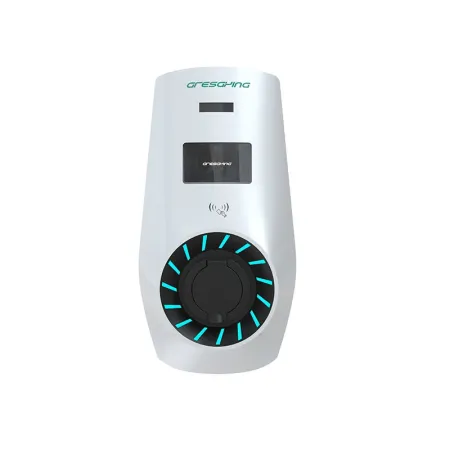
Because it uses alternating current, the charger itself is relatively simple and inexpensive to manufacture. The power conversion happens inside the vehicle, which is why the actual charging rate always depends on the car's onboard charger as much as on the wall unit. You can see how this looks in practice in the Turbo Wallbox range, which supports three-phase AC output in a compact housing.
Before You Order: 11kW charging needs a three-phase supply, which is standard in most European homes and commercial buildings but uncommon in North American residential properties. Have a qualified electrician confirm your supply type and available capacity before purchasing any 11kW unit.
Who Gets the Most From 11kW Charging
Drivers With Three-Phase Homes
If your property already has three-phase power, 11kW is the natural upgrade from a 7kW single-phase wallbox. You gain close to 60% more energy per hour without any change to your electrical infrastructure.
Workplaces Sharing Chargers
Where several employees rotate through the same bays during the day, faster turnover matters more than absolute speed. A workplace charging layout built on 11kW units serves more vehicles from the same electrical capacity than a bank of 7kW boxes.
Fleets Returning to Base
Vans and pool cars that park overnight can all be fully replenished on AC power, avoiding the cost and grid impact of DC fast charging. Fleet depots typically run a mix of AC and DC — see our fleet hub charging approach for how the two layers combine.
Apartment and Multi-Tenant Sites
Shared residential parking benefits from shorter occupancy per bay. Combined with load management, 11kW units let a building serve more residents without a supply upgrade.
Technical Requirements at a Glance
A competent installer will also check cable routing, earthing arrangements and any need for a separate distribution board. The practical steps are set out in our home charger installation guide.
11kW vs 7kW vs 22kW: Which Power Level Fits?
- 7 kW — single-phase Roughly 20–40 km per hour. Works on most domestic supplies and costs the least, but is limited by the single-phase connection.
- 11 kW — three-phase Roughly 40–70 km per hour. The best balance for buildings that already have three-phase power and for shared or commercial bays.
- 22 kW — three-phase Roughly 80–120 km per hour. Faster on paper, but needs 32A per phase and a higher-capacity supply; many cars cannot accept the full rate anyway.
The deciding factor is rarely the charger. It is the onboard charger fitted to the vehicle. A car with a single-phase onboard charger will draw the same power from an 11kW box as from a 7kW box, so confirm your vehicle's AC acceptance rate before paying for extra capacity. Gresgying's 11kW wallbox has been deployed in markets such as Poland, where three-phase supply is commonplace.
What to Look For When Buying
- Adjustable current: The unit should let you set the output below 16A if your supply is constrained, rather than forcing a fixed load.
- Dynamic load management: Essential where several chargers share one supply, so the building's main fuse is never tripped.
- Connectivity and scheduling: Wi-Fi, Ethernet or 4G options plus the ability to charge during off-peak hours reduce running costs.
- Certifications and protection: CE marking, regional approvals and an ingress-protected enclosure are baseline requirements for outdoor installation.
- Warranty and spares: Look for at least a two-year warranty, with local service and spare-part availability where you operate.
For commercial installations, open protocols matter as much as hardware. OCPP compliance keeps the unit compatible with third-party management platforms and future software features, and is covered in more depth in our guide to commercial wallbox standards.
Running Costs and Efficiency
AC charging at 11kW is inherently efficient because the conversion losses are smaller than at higher currents, and the slower rate is easier on battery cells. The bigger savings usually come from when you charge rather than how fast. Shifting sessions into off-peak windows, or pairing the charger with rooftop solar, can cut the cost per kilometre substantially. The mechanics of this are explained in our article on AC charger energy efficiency.
Rule of thumb: choose the lowest power level that comfortably refills your vehicle within the time it is parked. Extra kilowatts you cannot use add cost without adding convenience.
Conclusion
An 11kW electric car charger hits a genuinely useful sweet spot. It is noticeably quicker than the familiar 7kW wallbox, yet avoids the heavier supply requirements and higher price of 22kW equipment. For anyone with three-phase power — whether a homeowner, a workplace, a fleet depot or a residential car park — it is the most sensible default choice for everyday AC charging.
Before ordering, confirm three things: your supply is genuinely three-phase, your vehicle can accept 11kW on AC, and the unit you buy carries the right certifications with local support behind it. Our broader EV charger selection guide walks through the remaining decisions.
Looking for an 11kW Charger That Fits Your Site?
Talk to Gresgying about power levels, three-phase compatibility and the right charger mix for your home, workplace or fleet project.
Get Your Free Quote →