
Hot Sale Wallbox Charger: What Demand Structure Tells You
When a particular hot sale wallbox charger configuration keeps topping distributor lists, that popularity is a coded message about constraints. It reflects what supply type a building has, how long vehicles dwell, and what regulations a market enforces. Reading that demand structure on the AC wall-mounted box — single-phase versus three-phase, tethered versus socketed, metering and load management included or not — tells you far more than any single brochure. This article unpacks the mainstream spec combinations without quoting any sales figures, and shows how to turn the pattern back into your own buying decision.
Which Wallbox Specs Have Become the Mainstream
Two ratings dominate the AC wallbox world, and they map directly onto local supply. The 7 kW single-phase unit is the default wherever a normal domestic or small-commercial connection is all that exists; it asks for roughly 32 A on one phase and fills a typical battery overnight. The 11 kW three-phase box is the workhorse in markets where three-phase supply is standard, adding around 60% more energy per hour with no other infrastructure change. Gresgying's Turbo Wallbox spans both, and the 11 kW launch in Poland was a direct response to a three-phase market rather than a spec chosen in isolation.
The lesson is that "mainstream" is local. A configuration that is everywhere in one region can be rare or impossible in another, purely because of the wires in the wall.
Tethered vs Socketed: A Real Trade-off
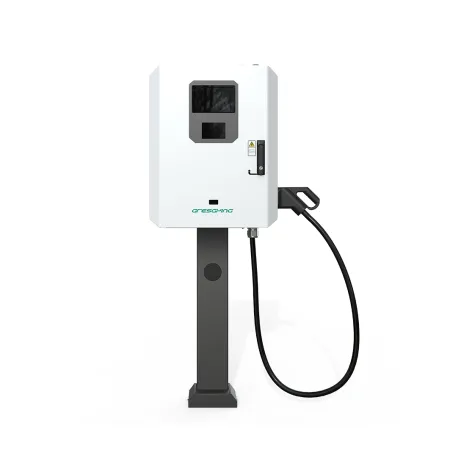
Among the best-selling wallboxes, the tethered-versus-socketed decision is the one buyers debate most. A tethered unit arrives with a cable fixed to the enclosure: convenient, weather-managed, and impossible to forget, but it dictates the connector type and leaves you replacing the whole cable run if it wears. A socketed unit takes a standard Type 2 plug you bring yourself: flexible across vehicle types and cheaper to keep spare cables for, but it relies on users carrying and stowing a cable. Neither is universally "hot" — the mix shifts with the use case. The trade-off is explored in the wallbox convenience guide, and it is one of the first questions a workplace charging planner should settle.
Why OCPP and Metering Became the Default
A few years ago, open protocols and built-in metering were selling points. Today they are the floor. Once a wallbox is shared — between employees, residents or customers — you need to authorise sessions, bill accurately and keep the unit on a backend you control. OCPP is what stops the hardware from being locked to one software vendor, and metering is what makes any of it accountable. The robust AC charger guide for fleets lays out exactly why these two features are now non-negotiable rather than optional extras.
Dynamic Load Management: From Option to Requirement
The clearest shift in wallbox demand is load management moving from a nice-to-have to a near-requirement. A site with six 7 kW units left unmanaged would demand far more current than most boards can spare. Dynamic load management measures the building's real consumption and trims charger output so the main fuse never trips, letting a site install many more points than its raw supply suggests. Gresgying's energy distribution guide shows how this plays out across multiple units, and it is now baked into the AC product line rather than sold as an upgrade.
Why a "Hot Config" Does Not Travel Across Markets
The biggest mistake a buyer makes is copying a best-seller from one country and assuming it fits the next. Three structural differences block that shortcut.
A fleet hub specified for one country can be non-compliant and uneconomic the moment it crosses a border, which is why the demand structure must be read locally, not imported.
Reading the Demand Structure Back Into Your Procurement
Use the mainstream pattern as a filter, not a verdict. Start from your own supply: single-phase points you at 7 kW, three-phase opens 11 kW. Then decide tethered or socketed from who will use it and who will maintain the cable. Insist on OCPP and metering for anything shared, and treat load management as mandatory once you exceed two or three units. The smart AC charging overview and the fleet management integration piece both reinforce this order of priorities, and the EV charger selection guide turns it into a concrete shortlist. For the hardware itself, the Turbo Wallbox solution is built around exactly these mainstream choices.
Conclusion
A hot sale wallbox charger is not a mystery to chase — it is a summary of real constraints. The mainstream splits around 7 kW single-phase and 11 kW three-phase, with tethered-or-socketed decided by usage, and OCPP, metering and load management now part of the baseline rather than the upgrade list. None of that travels untouched across markets, because supply systems, certification and incentives differ. Read the structure against your own site, and the right specification chooses itself.
Not Sure Which Wallbox Config Fits Your Market?
Talk to Gresgying about single-phase, three-phase, tethered and load-managed wallboxes matched to your supply and regulations.
Get Your Free Quote →Related Products
More items about wallbox charger

We Have The Best Solutions for Your Business
User Reviews
What users say about Us
Frequently Asked Question
Do you have any question?
Our Wallbox Chargers have a power output range from 3.7 kW to 22 kW.
Yes, our Wallbox Chargers are designed to be compatible with all types of EVs.
Yes, we provide a 2-year warranty on all our Wallbox Chargers.
The charging time depends on the EV's battery capacity and the charger's power output. On average, it takes about 4-6 hours.
Yes, our Wallbox Chargers are designed for both indoor and outdoor installations.
Yes, our Wallbox Chargers are certified by TÜV, CE, and other relevant safety standards.
Yes, our Wallbox Chargers can be integrated with most smart home systems.
Yes, our Wallbox Chargers are designed to handle voltage fluctuations.
Our updates and blog posts

Gresgying AC Charger: Powering Your Devices Efficiently
Gresgying AC Charger is an efficient, safe and portable charger that provides fast and safe charging for a variety of devices, making it your ideal charging solution.

Gresgying Charging Center: Revolutionizing the way we power our devices
Gresgying Charging Hub is a powerful and portable charging station that can provide fast and safe charging for multiple devices at the same time, making it an ideal choice for technology enthusiasts.
Gresgying charging stations: the rules of the road for device charging
Gresgying Charging Station is a powerful and portable charging station that can provide fast and safe charging for multiple devices at the same time, making it an ideal choice for technology enthusiasts.