180kW Electric Car Charger: High-Power DC Charging Explained
As electric vehicles move from early adopters to mainstream fleets, the demand for faster charging keeps pushing upward. The 180kw electric car charger sits at the upper end of what most passenger-car sites can usefully deploy today, delivering near-peak speeds for the latest 800V platforms while still fitting within a realistic grid connection. This guide explains what 180kW really delivers in practice, how it differs from the more common 120kW tier, and where it earns its place on the network.
What 180kW Means on the Ground
A 180kW DC charger feeds direct current straight into the battery, bypassing the vehicle's onboard charger. For a car that can accept the full rate, a 20% to 80% top-up typically lands in roughly 15 to 20 minutes, a few minutes quicker than the same session on a 120kW unit. The gain sounds small, but on a busy corridor those minutes multiply across hundreds of sessions a day and add up to noticeably more throughput per stall.
The headline number, however, is misleading on its own. Charging follows a curve, and most cars only reach their maximum acceptance in a narrow window of the state-of-charge range. Outside that window the charger slows to protect the battery, so the real-world average is well below 180kW. The engineering behind holding power through that middle plateau is set out in our guide to high-performance DC charger specifications.
800V Platforms Matter: A 400V car is physically limited in how many amps it can pull, so it may never reach 180kW. Only vehicles built on 800V architectures unlock the top of the curve. Check the vehicle's peak DC acceptance before assuming a stall will run at full speed.
Why 180kW Fits Highway Corridors and Hubs
The strongest case for this power level is where dwell time is shortest and traffic is highest. Motorway service areas, transit interchanges and logistics-adjacent hubs all benefit from moving each vehicle through as fast as the car allows. When drivers are paying by the minute or simply want to get back on the road, shaving a few minutes per stop keeps queues shorter.
High-Traffic Motorway Nodes
Sites where vehicles arrive with little warning and leave within half an hour get the most from the extra kilowatts. Our public fast charging solutions are built around shared-power stalls that keep throughput high at peak.
Fleet and Logistics Hubs
Mixed-duty fleets that return mid-shift need rapid turnaround between routes. A fleet hub charging layout pairs DC speed with slower overnight bays to cover every duty cycle.
Premium Destination Sites
Locations that want to signal capability — flagship retail, airports, major venues — gain a marketing edge from visibly fast infrastructure.
180kW vs 120kW: The Real Experience Gap
The gap between the two tiers is smaller than the numbers suggest, because the limiting factor is usually the car rather than the charger. The comparison below shows where the extra power actually helps and where it does not.
In short, 180kW pays off where a meaningful share of traffic is 800V-capable and where every minute of stall time is revenue. Where most visitors arrive in older 400V cars, the extra spend may never be recovered. The trade-offs are explored further in our article on DC charger power output for public networks.
Wide Voltage Range and Liquid-Cooled Cables
At 180kW, cable management becomes a real concern. The current needed to deliver that power at lower voltages would make an air-cooled cable uncomfortably heavy and hot, which is why capable units use liquid-cooled cables that stay slim and safe to handle. A wide output voltage range — typically spanning 200V to 1000V — ensures both legacy 400V cars and modern 800V platforms charge at their natural rate without the charger throttling itself.
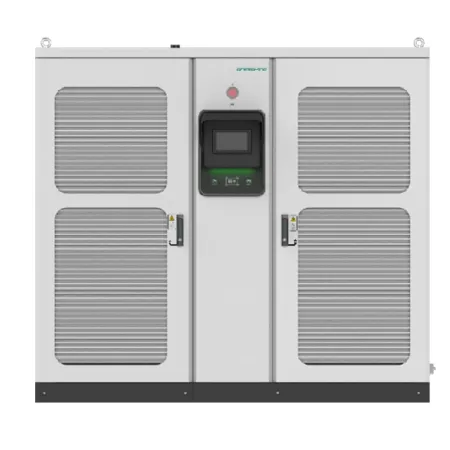
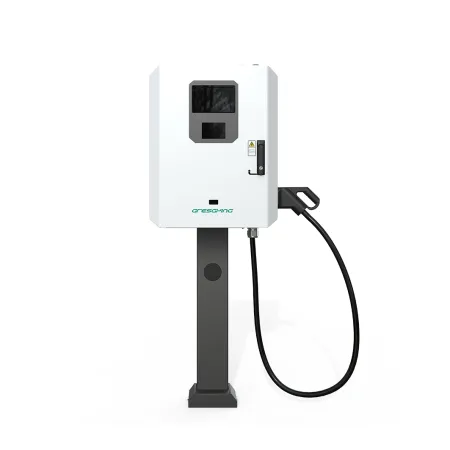
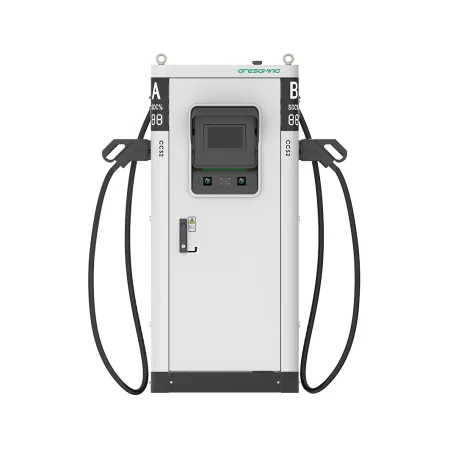
Gresgying's 120–180kW DC charging station platform is engineered around this shared architecture, with liquid-cooled options and a voltage range that covers the full spread of vehicles on the road today and tomorrow. For even higher demand, the architecture extends into modular hub designs such as the 480kW charging hub host.
Power Sharing and Throughput Management
- Dynamic sharing: When two cars share a 180kW unit, total output is divided so the site never exceeds its supply, while idle stalls lend capacity to busy ones.
- Demand control: Coordinating peak draw across a bank of stalls keeps demand charges manageable — see our high-throughput power management guide.
- Modular expansion: Adding terminal modules as traffic grows avoids a full rebuild — covered in our article on modular charging hub scalability.
Certification and Proven Deployment
High-power equipment faces more scrutiny than slower tiers, so independent validation matters for both procurement and insurance. The Gresgying 120–180kW platform holds TÜV SÜD certification, and its performance in demanding northern conditions is documented in our Iceland installation case study. Comprehensive high-power demonstrations are summarized in our report from the Shenzhen CPSE exhibition.
Reliability is what separates a good specification from a good investment. Remote diagnostics, field-swappable power modules and preventive maintenance keep stalls earning rather than waiting for repair. The financial logic is worked through in our DC charger ROI analysis.
Conclusion
The 180kw electric car charger is the right answer for high-traffic corridors, logistics hubs and premium destinations where 800V-capable vehicles are common and every minute of stall time carries value. It is not a universal upgrade over 120kW — for many sites the extra cost simply buys speed that most cars cannot absorb. Choose it where throughput, vehicle mix and grid capacity all point the same way, and specify liquid-cooled cables, a wide voltage range and genuine power sharing so the hardware keeps pace with the next generation of vehicles.
If you are weighing 120kW against 180kW for a specific location, our broader EV charger selection guide helps map demand, dwell time and connection cost to the right tier.
Planning a High-Power 180kW Site?
Talk to Gresgying about power tiers, liquid-cooled cabling and grid capacity for your corridor, hub or fleet location.
Get Your Free Quote →